2026: Volume 3, Issue 1
Past Issues
 PDF
PDFXiaoxianxiong Decoction Ameliorates Obesity-induced Type 2 Diabetes by Suppressing the NLRP3 Inflammasome Activation
Ruqian Ding1, Yihan Wang2, Yijiu Yang3, Zhenhua Zhang1*
1Guang’anmen Hospital, China Academy of Chinese Medical Sciences, Beijing 100053, China
2National Research Institute for Family Planning, Beijing 100081, China
3Institute of Basic Research in Clinical Medicine, China Academy of Chinese Medical Sciences, Beijing 100700, China
*Corresponding author: Zhenhua Zhang, Ph.D, Guang’anmen Hospital, China Academy of Chinese Medical Sciences, Beijing 100053, China, Tel: (86) 10-8280-5570, Fax: (86) 10-8280-1380, E-mail: [email protected]
Received: April 02, 2026
Published: May 28, 2026
ABSTRACT
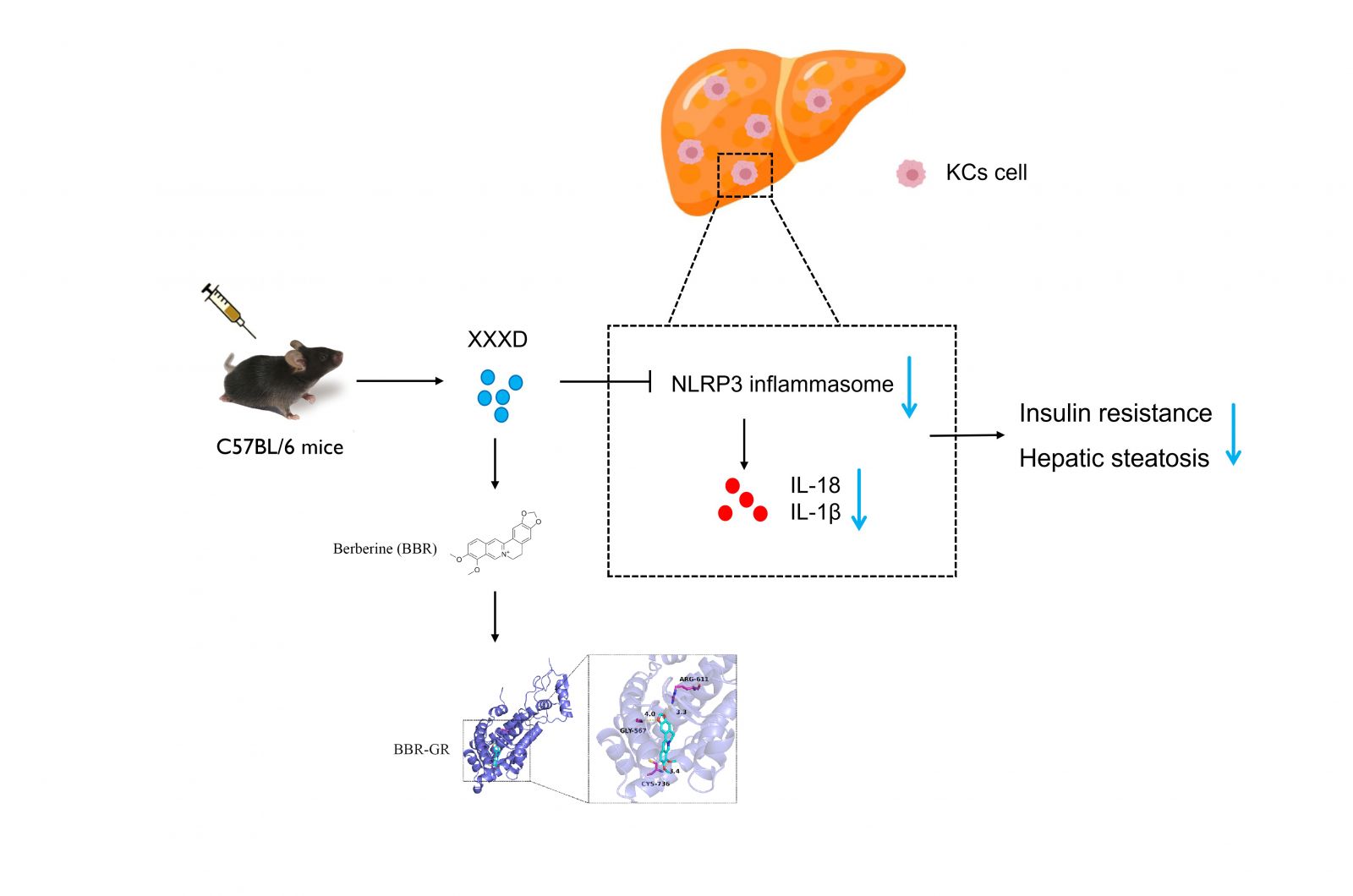
Obesity leads to chronic and systemic inflammation, resulting in insulin resistance (IR) and type 2 diabetes (T2D). This chronic inflammation has emerged as a key feature of T2D. Xiaoxianxiong decoction (XXXD) is a classic and well-known decoction that has been used to treat patients with severe pneumonia by inhibiting the inflammatory response. However, the pharmacological mechanism underlying XXXD ameliorates obesity-induced T2D is poorly understood. Here, we demonstrated that XXXD alleviated T2D by suppressing the inflammation through the NLRP3-dependent pathway. We found that XXXD-treated mice had significantly lower blood glucose levels and body weights in the HFD + STZ mouse model (Streptozotocin with high-fat diet). XXXD improved insulin resistance (IR) as indicated by the Oral glucose tolerance test (OGTT) and the insulin tolerance test (ITT) analyses. Oil red O staining and hematoxylin and eosin (H&E) staining showed that XXXD protected against the development of hepatic steatosis in the T2D mice model. Mechanistically, XXXD reduced hepatic inflammation through the NLRP3-mediated signaling pathway. In addition, we demonstrated that XXXD inhibited the accumulation of macrophages and their transformation into a pro-inflammatory state in the T2D livers. Through molecular docking simulation and molecular dynamics (MD) simulations, we identified the glucocorticoid receptor (GR) as a potential molecular target of XXXD treatment. Collectively, these findings demonstrated that XXXD reduced adiposity, improved glucose tolerance, and restored insulin sensitivity through the suppression of inflammation in the NLRP3-dependent signaling pathway.
Keywords: Xiaoxianxiong Decoction, Type 2 diabetes, Glucose Tolerance, Inflammation, NLRP3
